Best Piononos de Santa Fe Near Me Guide
 By admin
 There are pastries, and then there are piononos de Santa Fe. If you have ever had the real thing — the soft, delicate sponge roll soaked in sugar syrup, crowned with a toasted cream that caramelizes lightly on top — you already understand why people search so intently for the best piononos de Santa Fe near me. And if you are new to this iconic Spanish confection, you are about to discover one of the most quietly extraordinary sweets that Andalusian cuisine has ever produced.
This guide exists because finding a genuinely excellent pionono is not as straightforward as walking into any bakery and pointing at a display case. The real pionono — the one from Santa Fe, Granada — is a product of a very specific place, a very specific tradition, and a very specific technique. Outside of that village in southern Spain, piononos are frequently imitated, simplified, and served in a form that barely resembles the original. Knowing the difference, knowing where to look, and knowing what questions to ask will completely transform your search.
Whether you live in Spain, have Spanish roots elsewhere in the world, or are a curious food traveler who encountered piononos on a trip to Andalusia, this comprehensive guide will walk you through everything — from the history and cultural significance of the pastry to practical strategies for finding the best piononos de Santa Fe near you right now.
The Origin Story: Why Santa Fe and Nowhere Else
To understand why the phrase “piononos de Santa Fe” is so specific — and why the location matters as much as the name — you have to go back to the mid-nineteenth century and to a pastry chef named Ceferino Isla González. He worked in Santa Fe, a small town in the province of Granada in Andalusia, and in 1897 he created what would become one of Spain’s most beloved regional pastries.
The pionono was crafted as a tribute to Pope Pius IX, whose name in Italian — Pio Nono — directly inspired the pastry’s name. Ceferino shaped the small cylinder of rolled sponge to resemble the Pope’s vestments, and the little cap of cream on top was meant to evoke a papal miter. What began as a confectionary act of devotion became a cultural institution.
The original recipe was kept within the Isla family for generations. The Casa Ysla bakery in Santa Fe continued to produce piononos using the same fundamental method well into the modern era, and the pastry became so associated with the town that Santa Fe itself became known as the birthplace of the pionono. Visitors traveling through Granada would detour specifically to Santa Fe to taste the real thing. Bus stops near the town reportedly had vendors selling piononos to travelers passing through.
This history matters when you are searching for the best piononos de Santa Fe near you, because it tells you something essential: a pionono is not just a small rolled pastry with cream. It is a specific artifact of a specific place, and quality and authenticity are measured against that original.
What Makes an Authentic Pionono de Santa Fe
The word “authentic” gets overused in food writing, but in the case of piononos de Santa Fe, it actually has a clear, definable meaning. There are measurable, identifiable characteristics that separate a genuine pionono from a generic imitation. Understanding them will sharpen your eye and your palate.
The sponge. The base of a pionono is a thin sheet of bizcocho — a light, airy Spanish sponge cake — that is baked flat, soaked in a sugar syrup flavored with cinnamon, and then tightly rolled into a small cylinder. The sponge should be moist but not wet, structured but not dense. When you bite into it, it should yield gently and release the subtle sweetness of the syrup evenly throughout.
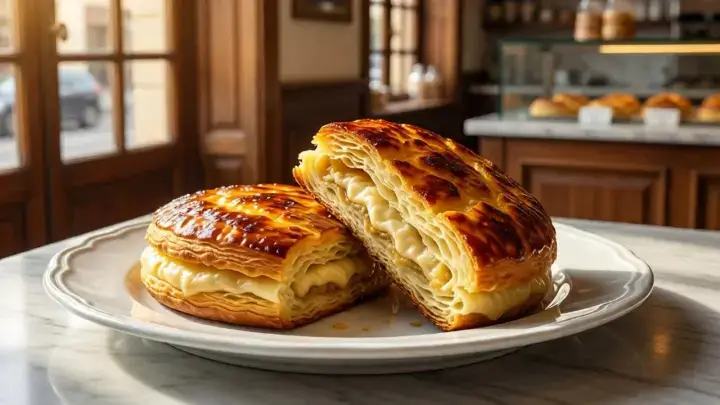
The cream. This is where piononos earn their reputation. The cream used in authentic piononos de Santa Fe is a thick, rich crema pastelera — a custard cream — that is piped onto the top of each cylindrical roll and then briefly torched or grilled until it caramelizes on the surface. That slight char, that thin crackling layer of burned sugar over silky custard, is the sensory signature of a proper pionono. It should taste of warm vanilla and caramel, with a faint bitterness from the toasted edge that balances the sweetness perfectly.
The size. Traditional piononos de Santa Fe are small — roughly the diameter of a finger, no taller than a few centimeters. They are single-bite or two-bite pastries, not the oversized, dessert-course creations that some modern bakeries produce in the name of a “generous portion.” The small size is not incidental. It is part of the pastry’s identity, ensuring that the ratio of sponge to cream remains precisely balanced.
The freshness factor. Piononos are not shelf-stable pastries. They are meant to be eaten the day they are made, ideally within hours of the cream being torched. A pionono that has been sitting in a display case since morning will have lost the contrast between the crisp caramelized top and the cool, soft custard beneath. Freshness is not a bonus feature — it is fundamental to the experience.
The Difference Between Piononos de Santa Fe and Other Versions
Once you begin searching for piononos de Santa Fe near me, you will almost certainly encounter pastries sold under the same name that bear little resemblance to the original. This is not necessarily malicious — it reflects the fact that the pionono name has drifted, particularly in Latin America, where different countries have adopted the term for entirely different confections.
In several Latin American countries, particularly in the Caribbean and Central America, “pionono” refers to a savory rolled dish made with fried sweet plantains filled with seasoned meat. It is delicious in its own right, but it has essentially nothing in common with the Santa Fe pastry beyond the name. If your search for piononos de Santa Fe leads you to a Cuban or Puerto Rican restaurant, you may find excellent food, but you will not find the Andalusian pastry you are looking for.
Even within Spain, piononos are sometimes made in ways that deviate significantly from the Santa Fe tradition. Some bakeries produce larger versions, use inferior sponge recipes, skip the syrup-soaking step, or apply the cream without toasting it — that last omission being particularly consequential, since the torched caramel layer is arguably the most important element of the pastry’s flavor.
When you find a bakery or restaurant claiming to serve piononos de Santa Fe specifically, it is worth asking a few clarifying questions to understand what you are actually getting.
How to Search Effectively for Piononos de Santa Fe Near You
The search for the best piononos de Santa Fe near me requires a layered approach that goes well beyond a simple Google Maps query. Here is how to search intelligently, whether you are in Spain, in a European city with a significant Spanish diaspora, or in a city elsewhere in the world where Andalusian cuisine has taken root.
Search in Spanish. This sounds obvious, but many authentic Spanish bakeries and confectionery shops maintain their online presence primarily in Spanish. Searching for “piononos granadinos,” “pastelería andaluza,” or “dulces de Santa Fe Granada” in combination with your city name will surface results that a purely English-language search would miss entirely.
Target Spanish cultural centers and associations. In cities outside Spain, Spanish cultural centers, Casas de España, and regional Andalusian associations are often the most reliable source of information about where to find authentic Spanish pastries. These organizations frequently organize cultural events featuring traditional foods, and their members often have personal recommendations for bakeries and restaurants that take Andalusian confectionery seriously.
Look for Granada-connected establishments. Restaurants and bakeries run by people with specific ties to Granada — rather than generic “Spanish tapas bars” — are significantly more likely to serve or know where to find genuine piononos de Santa Fe. A Granadan owner is far more likely to have a family relationship with this pastry than someone from, say, the Basque Country or Catalonia.
Specialty Spanish import food shops. In many cities, specialty food stores that import products from Spain stock vacuum-sealed or preserved piononos de Santa Fe from established producers in Granada. While these are never quite as good as freshly made piononos, they are a legitimate option when fresh ones are unavailable, and the shop owners often have connections to local Spanish food communities that can point you toward fresher sources.
Spanish food festivals and markets. Gastronomic fairs, Spanish food festivals, and artisan food markets frequently feature vendors selling traditional regional Spanish pastries. These events are one of the best places to encounter freshly made piononos de Santa Fe outside of Andalusia, because the vendors who attend them typically specialize in exactly this kind of quality regional confectionery.
What to Look for When You Find a Potential Source
Once you have identified a bakery, pastry shop, or vendor that claims to sell piononos de Santa Fe, here is how to evaluate whether what they are offering is the real thing.
- Observe the size. Authentic piononos de Santa Fe are small — a proper single-bite cylinder, not a large roll. If what you are seeing is the size of a slice of Swiss roll cake, it is not a traditional pionono.
- Check the top. The caramelized custard cream on top should show visible char marks or browning. A pale, untoasted cream top indicates that the toasting step was skipped, which significantly diminishes the pastry’s character.
- Ask about freshness. When were these piononos made? If the answer is anything other than “today” or at most “this morning,” be cautious. A pionono that is more than half a day old has already passed its peak.
- Smell before you bite. Fresh piononos have a warm, caramel-vanilla scent from the toasted cream that is immediately recognizable and deeply appetizing. An absence of that scent is usually a sign that the toasting was done too long ago or not at all.
- Ask about the sponge preparation. Does the bakery soak the sponge in sugar syrup? Is the syrup flavored with cinnamon? A baker who knows piononos will answer these questions without hesitation.
The Role of Casa Ysla and the Santa Fe Tradition
Any serious discussion of piononos de Santa Fe must spend time on Casa Ysla, the original bakery founded by the pastry’s creator and still operating in Santa Fe today. For many people who have tasted piononos at Casa Ysla, it becomes the benchmark against which every other pionono is measured — and most others fall short.
What Casa Ysla does that is difficult to replicate outside of Santa Fe is maintain the full context of the pastry’s preparation. The ingredients, the water, the specific kitchen environment, the techniques passed down through generations of the family, and the cultural weight of the tradition all converge in that small bakery in a way that simply cannot be fully transplanted to another location.
This is worth understanding not as a counsel of despair — “nothing outside Santa Fe is worth eating” — but as a calibration of expectations. If you visit Granada and have the opportunity to go to Santa Fe and eat piononos at Casa Ysla or another well-established local pastry shop, take it. That experience will give you a definitive reference point. Everything you eat after that will be measured against it, and you will be a far more discerning consumer of piononos wherever you find them.
If you cannot make that trip, the goal becomes finding the best approximation available to you — and with the right knowledge, excellent piononos can be found in many parts of Spain and in Spanish-influenced communities around the world.
Case Studies: Patterns From the Search for Piononos de Santa Fe
People who search seriously for piononos de Santa Fe — whether as passionate food travelers, members of the Granadan diaspora, or dedicated pastry enthusiasts — tend to accumulate experiences that reveal consistent patterns. These patterns are worth examining because they offer genuine guidance for anyone conducting their own search.
The Granada visitor who becomes a lifelong seeker. A very common trajectory begins with a trip to Granada — often a visit to the Alhambra — during which the traveler picks up a box of piononos from a shop near the city center or takes the short journey to Santa Fe itself. That first taste leaves such a strong impression that, upon returning home, the traveler immediately begins searching for piononos de Santa Fe near them. This is not nostalgia for its own sake; it is the recognition that something genuinely extraordinary was tasted, and that experience deserves to be repeated. Many of the most knowledgeable pionono seekers outside Spain have this origin story.
The home baker who reverse-engineered the recipe. A second common pattern involves people who cannot find good piononos near them and decide to learn to make them. This journey, while demanding, is deeply educational. The home baker who attempts piononos de Santa Fe discovers exactly why freshness is so critical — the difference between a pionono with a just-torched cream and one made an hour earlier is stark and immediate. They also learn how precise the syrup-to-sponge ratio must be, and how the rolling technique affects the final texture. Home bakers who have gone through this process tend to be the best evaluators of commercial piononos, because they understand from the inside what proper preparation requires.
The Spanish expat who tracks down a trusted source. In cities with established Spanish communities — parts of London, Paris, Miami, New York, Buenos Aires, and others — there is often at least one bakery or restaurant run by someone from Andalusia who makes piononos with genuine care. These establishments often have no marketing budget and no prominent online presence, but they are known within the Spanish expat community through personal recommendation. Finding them requires the kind of social network access that most food app algorithms cannot provide. Spanish expats who have found these hidden gems often describe the experience with the same reverence that the Granada visitor uses — a small, perfect thing in an unlikely location.
The food journalist who discovered the regional variation question. A particularly instructive pattern comes from food writers and culinary researchers who have explored piononos beyond the Santa Fe standard. These researchers found that even within the province of Granada, there is variation in how piononos are made — different amounts of syrup, slightly different cream compositions, varying degrees of caramelization — and that informed consumers in Granada itself hold strong, sometimes passionate opinions about which local bakeries make the best version. This tells us that seeking out the “authentic” pionono is not a static goal but a living, evolving conversation about quality and tradition.
Pairing Piononos de Santa Fe: What to Eat and Drink Alongside Them
The context in which you eat a pionono affects the experience significantly. In Santa Fe and Granada, piononos are most commonly eaten as a merienda — the Spanish afternoon snack — or as a sweet accompaniment to coffee or tea. Understanding how to pair them well enhances the enjoyment considerably.
Coffee pairings. The most natural companion to a pionono de Santa Fe is a strong, short espresso — a café solo in Spanish tradition. The bitterness of the espresso provides an ideal counterpoint to the sweetness of the sponge and the richness of the cream. If espresso is too intense for your palate, a cortado — espresso cut with a small amount of warm milk — works equally well. The slight caramel notes in the torched cream echo the roasted character of the coffee in a way that feels almost deliberately calibrated.
Tea pairings. A properly brewed black tea — Assam or Darjeeling — is a refined alternative to coffee with piononos. The tannins in black tea serve the same palate-cleansing function as espresso bitterness, preventing the sweetness from becoming cloying. Avoid herbal or floral teas with piononos; they tend to clash with the cinnamon notes in the sponge syrup.
Wine pairings. For a more celebratory or grown-up context, a small glass of Pedro Ximénez sherry — the rich, dark, intensely sweet fortified wine from Jerez — is a spectacularly indulgent pairing with piononos. The dried fruit and molasses notes in PX sherry mirror and amplify the caramelized flavors of the pastry in a way that feels quintessentially Andalusian. It is a pairing for occasions, not for every afternoon, but when the moment calls for it, it is memorable.
What not to pair. Avoid pairing piononos with sparkling wine or cava unless you are in a celebratory context where the combination will be appreciated primarily for its festivity rather than its gastronomic harmony. The acidity of sparkling wine tends to compete with the cinnamon notes in the sponge. Similarly, pairing piononos with other very sweet desserts or pastries overwhelms the palate quickly — the pionono works best as a single sweet punctuation to a meal or afternoon, not as one element in a dessert spread.
Making Piononos de Santa Fe at Home: What You Need to Know
If your search for the best piononos de Santa Fe near me consistently comes up short, making them at home is a genuinely viable option. The recipe is not technically complex, but it requires attention to detail and a willingness to accept that the first attempt will be a learning experience.
The essential components are: a thin, even sheet of bizcocho sponge, a cinnamon-infused sugar syrup, a thick vanilla crema pastelera, and a kitchen torch for caramelizing the cream. The technique involves baking the sponge flat on a lined tray, soaking it lightly but thoroughly with the warm syrup, rolling it tightly while still warm and pliable, cutting it into small cylinders once cooled, piping a generous cap of custard cream on top of each cylinder, and then torching the cream until it caramelizes to a deep amber.
The variables that most affect the outcome are the moisture level of the sponge (too dry and it cracks when rolled; too wet and it becomes soggy), the temperature of the cream when piped (it should be cool and stiff, not warm and runny), and the technique of the torch (a quick, confident pass rather than a slow burn produces the best caramelization without cooking the custard beneath).
Home-made piononos de Santa Fe, when done well, are extraordinarily close to the commercial product. Many people who have gone through the process of making them at home report that it deepens their appreciation for the pastry and makes them significantly better at identifying quality when they encounter piononos elsewhere.
Keeping Quality High: Storing and Serving Piononos
Whether you have found fresh piononos from an excellent local source or made them yourself, storing them correctly ensures you get the best possible experience.
Piononos de Santa Fe should be stored in the refrigerator if they are not going to be eaten within two to three hours of preparation. The custard cream is a dairy product and requires refrigeration for food safety reasons. However, piononos taken directly from the refrigerator can be slightly too cold to fully appreciate — the sponge firms up at low temperatures, and the cream loses a little of its silkiness. The ideal approach is to remove them from the refrigerator fifteen to twenty minutes before eating, allowing them to come slightly toward room temperature while the custard stays cool and structured.
Piononos should not be frozen, as freezing irreparably damages the texture of both the sponge and the cream. And they should never be left uncovered, as the custard cream will develop a dry surface skin that eliminates the pleasure of the toasted top layer.
If you have purchased piononos that were made earlier in the day and their caramelized topping has softened, a brief pass with a kitchen torch can restore much of the original texture and aroma. This is worth doing — the revived caramelized top comes very close to the just-torched original.
Regional Prestige and Cultural Pride: Why Piononos de Santa Fe Matter Beyond the Pastry
Understanding why people are so passionate about finding the best piononos de Santa Fe near me requires appreciating what this pastry means to the people who grew up with it. For Granadans, and particularly for people from Santa Fe, piononos are not just a sweet they like to eat. They are a symbol of local identity, a point of regional pride, and a specific kind of cultural continuity.
In a food landscape increasingly dominated by global chains, mass-produced baked goods, and trend-driven confectionery, a pastry that has been made the same way in the same small town for well over a century represents something increasingly rare: specificity. A pionono de Santa Fe is not trying to appeal to everyone. It is not designed to be scaled to industrial production or adapted to multiple dietary preferences or reimagined in fusion form. It is what it is — a precise, historically grounded, technically demanding small masterpiece of Andalusian pastry craft.
This is why people go to lengths to find the real thing. It is why Granadans living outside Spain feel a particular kind of homesickness that a good pionono can briefly alleviate. It is why food travelers include Santa Fe on their itineraries when visiting Granada. And it is why the search for piononos de Santa Fe near me, however difficult it turns out to be, always feels worthwhile when the right result is found.
Frequently Asked Questions About Piononos de Santa Fe
What exactly is a pionono de Santa Fe? A pionono de Santa Fe is a small traditional Spanish pastry originating from the town of Santa Fe in the province of Granada, Andalusia. It consists of a thin sponge cake soaked in cinnamon sugar syrup, rolled into a tight cylinder, and topped with a cap of thick vanilla custard cream that has been briefly torched to create a caramelized surface.
Where did piononos de Santa Fe originate? They were created in 1897 by pastry chef Ceferino Isla González in Santa Fe, Granada. The pastry was named in honor of Pope Pius IX (Pio Nono in Italian), and the original recipe was kept within the Isla family for generations through the Casa Ysla bakery.
Are piononos de Santa Fe the same as the savory piononos found in Latin America? No. Despite sharing a name, the two are completely different foods. The Santa Fe pionono is a sweet Andalusian pastry made with sponge cake and custard cream. Latin American piononos, particularly in Cuba, Puerto Rico, and other Caribbean and Central American countries, are savory dishes made with sweet plantains and filled with meat. The only connection is the name.
What should I look for when buying piononos de Santa Fe? Look for small size (single or two-bite cylinders), a visible caramelized top with char marks from torching, a moist but structured sponge with a slight cinnamon sweetness, and freshness — ideally made the same day. Ask the vendor when they were made and whether the sponge was soaked in syrup.
Can I find piononos de Santa Fe outside of Spain? Yes, though it requires searching. Cities with significant Spanish diaspora communities often have bakeries or restaurants that make genuine piononos. Spanish cultural associations, specialty food importers, and Spanish food festivals are good sources. Vacuum-sealed piononos from Granada are also available from Spanish food import shops, though they are not as good as freshly made ones.
How long do piononos de Santa Fe stay fresh? Piononos are best eaten within a few hours of being made. If stored in the refrigerator, they can be kept for up to 24 hours, though the caramelized topping softens over time. They should not be frozen. Removing them from the refrigerator 15–20 minutes before eating improves the texture noticeably.
Can I make piononos de Santa Fe at home? Yes. The recipe requires a thin sponge cake, cinnamon sugar syrup, thick vanilla custard cream, and a kitchen torch. The technique is not difficult but requires attention to the moisture level of the sponge, the consistency of the cream, and the caramelization technique. First attempts are usually informative, and subsequent batches improve quickly.
What is the best drink to pair with piononos de Santa Fe? A strong espresso or cortado is the most traditional and complementary pairing. Black tea, particularly Assam or Darjeeling, is an excellent alternative. For a more indulgent occasion, a small glass of Pedro Ximénez sherry — the rich, sweet Andalusian fortified wine — is an outstanding combination.
Why are piononos de Santa Fe so small? The small size is an intentional and integral feature of the pastry, not an accident of portion control. The compact cylinder ensures the ideal ratio of sponge to cream, and the single-bite or two-bite format means each mouthful delivers the full combination of textures and flavors simultaneously. Larger versions of the pastry compromise this balance.
Is Casa Ysla still operating in Santa Fe? Casa Ysla, the original bakery founded by the creator of piononos, has continued operating in Santa Fe across multiple generations of the founding family. For anyone visiting Granada, a short trip to Santa Fe to taste piononos at their source remains one of the most recommended food experiences in the region.
Final Thoughts: The Perfect Pionono Is Out There
The search for the best piononos de Santa Fe near me is, at its heart, a search for something made with genuine care and rooted in genuine tradition. That kind of thing is always worth pursuing, even when the search takes patience.
The combination of a well-soaked sponge, a perfectly thick custard, and a caramelized top torched to amber perfection is one of those rare, seemingly simple confections that rewards the attentive eater enormously. When you find a genuinely excellent pionono de Santa Fe — whether in a bakery in Granada, a Spanish cultural center in a city far from Andalusia, or made in your own kitchen on a Sunday afternoon — it delivers the kind of quiet satisfaction that only a well-crafted, historically grounded food can provide.
For More Visits: Trendmagazine